CE Marking
CE is an abbreviation of the French phrase ‘Conformité Européene’ which literally translates as ‘European Conformity.’
CE certification demonstrates that a product has been thoroughly tested and meets the necessary requirements for safety, performance, and environmental impact.
CE certification is a requirement for products that fall under the scope of one or more of the EU’s New Approach Directives. These directives set out essential safety and health requirements that must be met by products before they can be sold in the EEA. The directives cover a wide range of products, including toys, electrical equipment, machinery, medical devices, and construction products, among others.
CE certification demonstrates that a product has been thoroughly tested and meets the necessary requirements for safety, performance, and environmental impact. This provides assurance to consumers and regulators that the product is safe and suitable for use, and helps to ensure a level playing field for manufacturers operating within the EEA
There are multiple regulatory requirements according to the product category in Europe. Based on the type of product category, the different regulations are being applied. Hence, it is necessary to understand which regulation need to be applied to which product. Moreover, along with the applicable directive requirements, it Is also necessary to identify the harmonized applicable standard(s). A vast forest of regulations, standards, and procedures. Time to time, such regulations are also being updated & changing. You understand you’re responsible for product compliance, but you feel frustrated because the rules are complex and the process is daunting.
There are multiple documentation needs to be created in line with the requirements of the standard. It is also necessary to organize the technical file up-to-date and to be kept available for a period of minimum 10 years.
Steps for CE Marking:
- Product Assessment and find applicable Directive and standards
- Know the essential requirements for your product
- Check if you need third-party certification
- Product Testing & Assess product conformity
- Create and maintain technical documentation
- Declaration of conformity & affixing the CE Mark
To cope up these requirements, you need a systematic and expertise support. A support that keeps you informed about the regulations so that you can take necessary actions accordingly. A system that allows you to verify and organize the certificates, test reports, and other conformity documentation. A system that offers support from professionals when it matters.
TuBroTICs, with more than two decades of experience & expertise level, can support you in a professional way to get your global compliance painless. TuBroTICs is acting as Technical Associate & Authorized partner of CEPROM in India, specialized in comprehensive and “One Stop Solution” solutions
Directive in scope are:
Low Voltage Directive (LVD) (2014/35/EU)
This Directive adopted and applicable from April 20, 2016 and it ensures that electrical equipment within certain voltage limits provides a high level of protection of health and safety of persons and the end users and also benefits fully from the Single Market.

Machinery Directive (2006/42/EC)
The Machinery Directive 2006/42/EC is a European Union (EU) directive that sets out the essential health and safety requirements for the design and manufacture of machinery. The directive applies to a wide range of machinery, including stationary and mobile machinery, power-driven equipment, and machinery used in hazardous environments.
EMC Directive (EMC) (2014/35/EU)
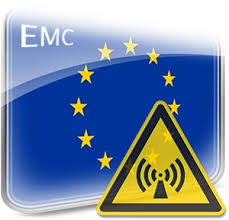
In today life, we are all surrounding with the Electronics Products. Form Household products to industrial application, electronics is everywhere. We are all familiar with the benefits of all these products but there are some hidden harmful effect which comes in terms of electromagnetic radiations. All electronics products emit electromagnetic radiations, some has higher and some has less radiations level.

Construction Product Regulation (Regulation No 305/2011)
Regulation (EU) No 305/2011, commonly known as the Construction Products Regulation (CPR), plays a critical role in ensuring that construction materials used across the European Union meet uniform safety, quality, and performance standards. Introduced by the European Parliament and the Council, this regulation came into force on 1 July 2013, replacing the older Construction Products Directive (89/106/EEC).

Pressure Equipment Directive (2014/68/EU)
The Pressure Equipment Directive (PED) 2014/68/EU is a crucial piece of legislation within the European Union that regulates the design, manufacture, and conformity assessment of pressure equipment and assemblies. This directive is vital to ensuring that such equipment operates safely and reliably throughout its service life, minimizing risks to people, property, and the environment.

Transportable Pressure Equipment Directive (2010/35/EU)
The Transportable Pressure Equipment Directive (2010/35/EU) is a cornerstone of European safety legislation governing the use and movement of pressure equipment across EU member states. Unlike static pressure equipment, transportable pressure equipment is subject to unique risks due to frequent handling, movement, and exposure to varying environmental conditions. As such, TPED ensures that these items meet strict technical, safety, and conformity standards to protect users, transport personnel, and the public

Lift and Safety Components for Lifts Directive (2014/33/EU)
Directive 2014/33/EU, officially titled “on the harmonisation of the laws of the Member States relating to lifts and safety components for lifts (recast)”, was adopted on 26 February 2014 and sets out unified rules on placing lifts and specific safety components on the European market. It is a “product / placing on the market” directive: it governs how lifts (once installed) and their safety-critical components are introduced, certified, and traced in the EU marketplace, rather than dictating exactly how every lift must be designed.

Equipment and Protective Systems for use in Explosive Atmosphere (ATEX) (2014/34/EU)
Directive 2014/33/EU, officially titled “on the harmonisation of the laws of the Member States relating to lifts and safety components for lifts (recast)”, was adopted on 26 February 2014 and sets out unified rules on placing lifts and specific safety components on the European market. It is a “product / placing on the market” directive: it governs how lifts (once installed) and their safety-critical components are introduced, certified, and traced in the EU marketplace, rather than dictating exactly how every lift must be designed.

Radio Equipment Directive (2014/53/EU)
Directive 2014/53/EU, commonly known as the Radio Equipment Directive (RED), is a key piece of legislation in the European Union that governs the placing of radio equipment on the EU market. It ensures that all radio-enabled devices meet essential health, safety, and electromagnetic compatibility (EMC) requirements, while also supporting the efficient use of the radio spectrum and enabling interoperability.